Crowd Lap turns color-matching into tactical transit puzzles
Crowd Lap, by Sina 167, is an Android puzzle about managing passenger flow at a busy transit station; the player's purpose is to prevent jams and fill buses. The core functionality asks players to tap colored queues and time releases so passengers circle a short loop until matching buses arrive, demanding anticipation and spatial planning. The game pairs color-matching logic with a loop buffer and one-tap release mechanics in a vibrant 3D style. It suits casual mobile players who seek short strategic puzzles and quick mental challenges.
What kind of puzzle is this in practice?
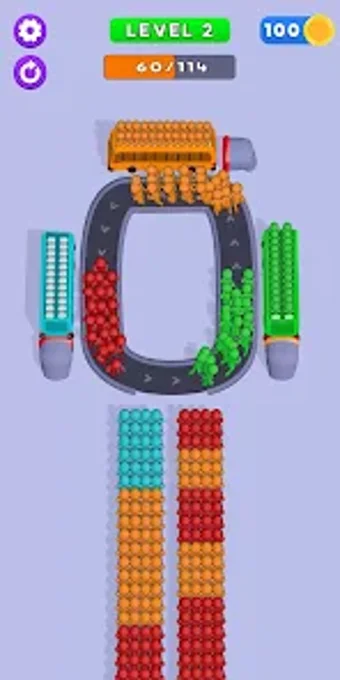
In this game, you manage a compact transit node where color-matching meets traffic control. Players tap queues to release groups of colored passengers onto a single looping road that holds them until compatible buses arrive. Clearing a level requires filling every seat on buses while avoiding a full loop; that win/lose condition converts simple matching into timed spatial decision-making.
How do the mechanics and modes shape play sessions?
Inside the station, the core loop rests on three concrete systems: color matching, a small buffering loop, and timed bus arrivals. Controls are single-tap to release queues, and levels grow in complexity so planning depth increases over time. Key behaviours include:
- tap-to-release queues;
- monitoring bus schedules;
- balancing road occupancy to avoid jams.
What does the game look and feel like on mobile?
Playing a run, the presentation is bright and uncluttered; the developer markets a "vibrant and clean 3D visual style," which helps read crowded lanes at a glance. Audio details are minimal in the description, so visual clarity carries the interface. The simple interaction model supports short sessions that begin quickly and end decisively when the loop jams or buses depart filled.
What drives replay and who will return?
While managing levels, replay value comes from escalating difficulty and the satisfying "bus departure" progression noted in the design. The game emphasizes short, repeatable rounds that reward tighter timing and better anticipation on later stages. Compared with basic color-sort puzzles, the loop mechanic shifts emphasis to spatial planning, making the game appealing for players who enjoy compact challenges rather than lengthy campaigns.
A well-suited pick for casual tacticians seeking short strategic puzzles
The game is a solid choice for casual players who enjoy short, mentally engaging runs that emphasize timing and spatial planning. However, those who prefer long-form campaigns or narrative progression may find the focus on compact levels limiting. It suits anyone looking for brief puzzle sessions that exercise planning and pattern recognition during commutes or short breaks.